Stolen bike without receipts: evidence to gather
France
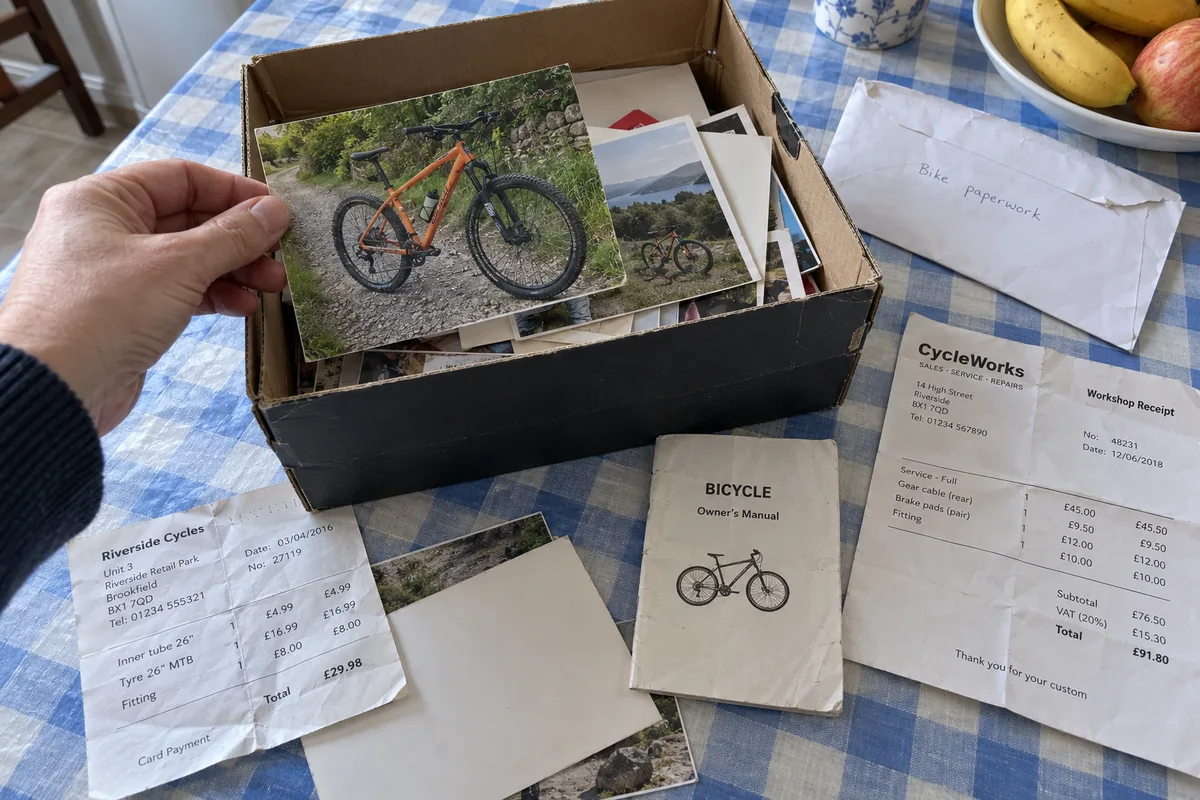
Start with older photographs, purchase messages and service records. Even if an invoice or number is missing, these can help describe the bike and prepare your evidence.
Where can you look for missing information?
Create a folder and organise records as you find them. This table gives you a starting point:
| Missing item | Where to look | What it can help establish |
|---|---|---|
| Purchase invoice | Emails, customer account, original shop | A duplicate invoice or purchase reference |
| Record of a private purchase | Original listing, messages, sale agreement | The date, description and terms of the purchase |
| Serial number | Bike paperwork, service records, frame photographs | An identifier to compare with a recovered bike |
| French identification marking number | Operator account, registration certificate | The number linked to your registration |
| Photograph of the bike | Backups, messages, photographs from rides | Equipment and recognisable details |
How can you request a duplicate invoice?
Give the shop the name used for the purchase, approximate date, brand and model. An order reference or payment record may help it find the transaction.
For example: “I bought a [brand and model] from you around [month and year], under the name [name]. Could you look for the invoice and any serial number recorded with it?”
For a private purchase, gather the existing messages and sale agreement. A bank statement can show a payment; it does not, by itself, describe a particular bicycle.
Which numbers are different?
The serial number comes from the manufacturer. The French identification marking number is added as part of the bike’s registration. Ask your operator about the latter: APIC explains how identification works.
Copy numbers exactly as they appear in your documents. If a character is unreadable, record that instead of guessing. The serial number guide explains what you are looking for.
How can your photographs help?
For each image, note a concrete detail: the saddle fitted at that time, a frame repair or a sticker. Add service invoices relating to replacement parts.
Keep the original images and put your observations in a separate document. The photography checklist helps distinguish an overall view from a useful close-up.
Who should receive your evidence?
In France, check the conditions of the online complaint service, or visit a police station or gendarmerie. State what you know and which documents are missing, then ask how to add further evidence.
If your bike is insured, ask your insurer which documents your policy requires and how to present the records available.
When a listing looks like your bike, compare it with your records and save its information. Give your observations to the police with the complaint reference, without confronting the seller.
Retrace compares your bicycle photos with listings on covered sites and alerts you to possible matches. Check coverage for your country before starting a search. Private groups and messages are not covered. Each possible match needs checking.
How it works